

Mushrooms and Medicine — The Oldest Pharmacy, and Also the Most Modern
Long before the word antibiotic existed, long before the first hospital, human beings were already healing with fungi. And long afterward, once medicine turned molecular, it was again the Fungi Kingdom that delivered some of the drugs that have saved the most lives in history: penicillin, the statins, cyclosporine. This is the chronicle of a medical alliance more than five thousand years old — from a mummy frozen in the Alps to the bioreactors where our medicines are made today.
A five-thousand-year intuition
The history of medicine is usually told as a straight line beginning in the laboratories of the twentieth century. It is an incomplete story. Long before anyone understood that bacteria existed, peoples across the world observed that certain fungi —and the molds that grow on decaying matter— held back infection, expelled parasites and closed wounds. They did not know why; they knew the result. That intuition, repeated for millennia across continents that never spoke to one another, is one of humanity's great silent consensuses: the Fungi Kingdom has always stood on the side of health.
Today we can name what they only sensed. Behind those practices were real molecules —acids, triterpenes, beta-glucans, antibiotics— that science would take centuries to isolate. This page traces that arc: from the living flesh of history to the pure molecule of the present.
The mummy who carried his medicine kit
In September 1991, the melting of a glacier in the Tyrolean Alps gave up the body of a man who had died some 5,300 years ago. They called him Ötzi, the Iceman: the oldest natural mummy in Europe. Among his belongings, threaded onto a leather strap, he carried two fungi. They were not food.
One was the birch polypore (Fomitopsis betulina, formerly Piptoporus betulinus). The other, the tinder fungus (Fomes fomentarius), part of a sophisticated fire-lighting kit. The astonishing part is the first: analyses of his body revealed that Ötzi suffered from whipworm (Trichuris trichiura), an intestinal parasite. And the birch polypore contains agaric acid and polyporenic compounds that are toxic precisely to that worm. That he carried this fungus, and no other, hung around his neck, suggests one of the oldest existing records of human self-medication: a natural antiparasitic, chosen with knowledge. (Scientific review of the Iceman's polypore, PubMed)

The birch polypore also had a long medicinal life in Eastern Europe, Russia and the Baltic countries: brewed as a tea for fatigue and as immune support, its fresh flesh applied to wounds to stop bleeding and as an antiseptic. Ötzi's intuition was no accident: it was the documented beginning of a pharmacopoeia.
Mesoamerica: the flesh of the gods was also medicine
At the other end of the world, the cultures of Mesoamerica developed one of the deepest relationships humanity has ever had with fungi. When the Mexica spoke of teonanácatl —the flesh of the gods—, they spoke of sacred mushrooms of the genus Psilocybe, at the center of ceremonies of divination and of healing. But the detail almost always omitted is that this relationship was also explicitly medicinal.
Fray Bernardino de Sahagún, in the sixteenth-century Florentine Codex, describes teonanácatl and notes that these little mushrooms are medicinal against fevers and gout. That is: in the most important ethnographic record of ancient Mexico, the sacred mushroom also appears as a remedy for fever and joint pain.
The scientific study of this heritage has an essential Mexican name: Gastón Guzmán Huerta (Xalapa, 1932-2016), a world authority on the genus Psilocybe, author of more than 200 new species and founder of modern ethnomycology in Mexico. It was Guzmán who clarified that Sahagún's teonanácatl corresponds to Psilocybe, documented the relationships of these fungi with the Nahua, Mazatec, Zapotec and Purépecha peoples, and made clear that Mexico is the country with the greatest diversity of sacred species in the world. (Guzmán, 2012, Acta Botanica Mexicana)

An honest clarification is due: psilocybin is today a controlled substance and its use belongs, above all, to the traditions of Indigenous peoples; mentioning it here is history and science, not an invitation. What is notable is that contemporary clinical research has turned its gaze once more, with rigor, to molecules that Mesoamerica knew by other paths. The wisdom was already there; science is only just catching up. We explore this biocultural root in depth in Mexico: Fungi Kingdom.
The Old World: from Dioscorides' agaric to bread on the wound
Greece and Rome had their own medicinal fungus of choice. In the first century, Dioscorides described in his De Materia Medica the agaric (Laricifomes officinalis, the larch polypore), to which properties for many ills were attributed; for centuries it was one of the most traded remedies in Europe, sometimes called the quinine of the forest. Ötzi's own tinder fungus, amadou (Fomes fomentarius), was also used to staunch wounds and to cauterize.
And then there is the practice that runs, without agreeing on it, through nearly every civilization: applying moldy bread or matter to wounds. The Egyptians record it in the Ebers Papyrus (around 1500 BCE); tradition attributes to Imhotep the use of moldy bread on infections. Hippocrates and Galen, in Greece and Rome, cleaned wounds with moldy bread and cloths soaked in wine. In China, moldy soybean curd was used on skin infections; and the same custom of moldy bread appears in the folk medicine of Serbia and half of Europe. In wars, where an infected wound killed more than the weapon, those poultices were, for centuries, the only line of defense. No one knew there might be an antibiotic in that mold. There was.

China and Japan: millennia of fungi as medicine
No tradition systematized medicinal fungi as thoroughly as that of the Far East. In traditional Chinese and Japanese medicine, several mushrooms have held a central place for more than two thousand years:
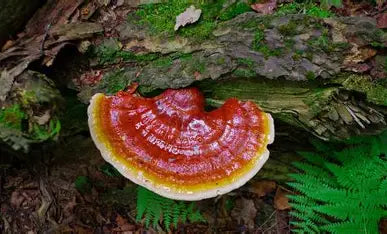
- Reishi (Ganoderma lingzhi) — the Chinese lingzhi, the mushroom of spiritual potency, so prized that finding it was considered an event of good fortune. It embodies the ancient idea of vitality and balance.
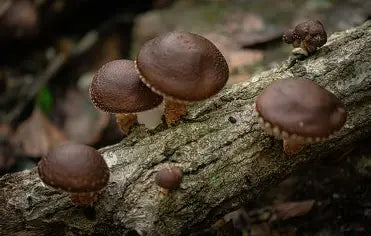
- Shiitake (Lentinula edodes) — food and medicine at once, cultivated in Asia for centuries; today it is the second most cultivated mushroom in the world.
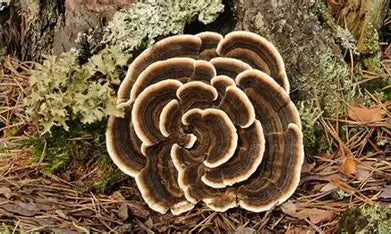
- Turkey Tail (Trametes versicolor) — the yunzhi, used in Chinese medicine for its strengthening and longevity-associated properties.
- Cordyceps (Ophiocordyceps sinensis) — the fungus that parasitizes caterpillars in the Himalayas, historically reserved for the nobility for its association with energy and endurance.
What is extraordinary is that this tradition did not remain symbolic: it gave rise to real, approved drugs that modern medicine uses today. We will reach them. You can get to know each species in depth on our Species page and its active chemistry in Biocomponents.
Bread on the wound becomes penicillin
All that ancient intuition about the mold that heals was waiting for one thing: for someone to look at it through a microscope. That someone was Alexander Fleming. In 1928, at St. Mary's Hospital in London, Fleming —who during the First World War had watched countless soldiers die of infected wounds— found, by accident, a culture plate contaminated by a blue-green mold. Around the mold, the bacteria would not grow. The anecdote holds that he murmured: that is funny. The mold was Penicillium, and the substance it produced, which he named penicillin, was the first antibiotic isolated and described by science.

Fleming made the discovery, but could not turn it into medicine. That was achieved a decade later by Howard Florey, Ernst Chain and their team at Oxford, who purified and produced penicillin at scale; Dorothy Hodgkin later determined its chemical structure, a feat for which she received the Nobel Prize. During the Second World War, the mass production of penicillin by fermentation saved a multitude of the wounded who, in any earlier war, would have died of infection. The ancient gesture of placing mold on a wound had become, at last, exact science. And it opened the age of antibiotics, which changed human life expectancy forever.
Beyond penicillin: the drugs the Fungi Kingdom gave to medicine
If the story ended at penicillin, it would already be enough. But the Fungi Kingdom went on delivering some of modern medicine's pillars. Four examples are enough to grasp the magnitude:
Statins (heart)
The Japanese biochemist Akira Endo, inspired by Fleming's story, searched among thousands of fungi for a brake on cholesterol. In the mold Penicillium citrinum he found compactin, and soon after, from Aspergillus terreus, came lovastatin, the first approved statin (1987). They are often described as the most important discovery since penicillin: they have saved millions of lives against cardiovascular disease.
Cyclosporine (transplants)
From the soil fungus Tolypocladium inflatum, cyclosporine was isolated, an immunosuppressant that keeps the body from rejecting a foreign organ. Without it, the modern era of organ transplantation simply would not exist.
Cephalosporins (more antibiotics)
From another fungus, Acremonium (formerly Cephalosporium), came a whole family of antibiotics — the cephalosporins— used today in hospitals worldwide. Penicillin was not an isolated case: it was the beginning of a mine.
Griseofulvin (antifungal)
From Penicillium griseofulvum came griseofulvin, an antifungal that for decades treated skin and nail infections. A fungus giving the cure against other fungi.

These drugs are specific medicines, approved by their health authorities for defined uses. They are mentioned here as history and science of the Fungi Kingdom, not as properties of Simbiosis products.
The invisible 60%: the fungi that manufacture medicine
There is an even quieter, and perhaps larger, role that fungi play in modern medicine and industry: they are the factories. An enormous share of the world's industrial enzymes —by various estimates more than half, close to 60 percent— is produced from fungi. Species such as Aspergillus niger, Aspergillus oryzae and Trichoderma reesei outdo bacteria and yeasts in their capacity to secrete protein, and are cultivated by the ton to produce enzymes we use in food, pharmaceuticals, diagnostics and biotechnology. (Review of fungal enzymes, PMC)

And there is a detail that closes the circle with our Fermentation page: baker's yeast, Saccharomyces cerevisiae —a fungus—, is today one of the most important biological factories in medicine. In modified yeast, part of the world's human insulin and the hepatitis B vaccine are produced, among many other biopharmaceuticals. The same organism that leavens bread now saves lives inside a bioreactor.
When tradition enters the hospital: the beta-glucans
Here the two threads of this story —the ancient Eastern and the modern scientific— are knotted together. From those fungi venerated in China and Japan came compounds that are approved medicines today. In Japan, two mushroom beta-glucans are licensed as adjuvants in oncology, alongside chemotherapy: lentinan, from shiitake, and PSK (Krestin), from turkey tail. (Clinical review of lentinan, PubMed) A meta-analysis of controlled trials found benefit from PSK as an adjuvant after colorectal cancer surgery. (Sakamoto et al., 2006, PubMed)

The protagonist of this story is a molecule: the beta-glucan, a polysaccharide of the fungal cell wall that the immune system recognizes and responds to. It is the same family of compounds our extraction methods seek to preserve and release; we explain it in Extraction Methods. Tradition had not chosen the wrong ingredient; it only lacked the microscope to name it.
The frontier: what science is exploring today
The conversation between fungi and medicine is not the past: it is one of the most active fields of current research. A few frontiers, set out with the prudence they deserve:
- Immunomodulation. The beta-glucans of fungi such as reishi, turkey tail, maitake and the blend of several species are studied for their dialogue with the immune system. At Simbiosis we bring them together in the 8-mushroom blend and in the Immunity and general wellbeing collection.
- Brain health. Lion's mane (Hericium erinaceus) concentrates a fascinating line of research for its compounds related to neuronal growth factors. It is science in progress, not a promise: we follow it closely in our Lion's Mane capsules and the Cognition and focus collection.
- Energy and performance. Cordyceps, that fungus of the Himalayan nobility, is studied for its relationship with energy metabolism and oxygenation. We offer it in Cordyceps capsules and in Energy and performance.
- Heart. The same kingdom that gave the statins remains a field of study for the balance of metabolism; we group it in Cardiovascular health.
- New antibiotics. Faced with bacterial resistance, one of the great health challenges of the century, fungi are again a source in the search for new molecules. The mine Fleming opened is far from exhausted.
- Psilocybin research. Under strict, regulated clinical frameworks, science today re-examines molecules that Mesoamerica knew by the ceremonial path. It is a serious field of study, entirely removed from any recreational use.

The thread that binds Simbiosis to this story

Simbiosis is born of this same reverence: the conviction that the Fungi Kingdom has accompanied human health for millennia, and that it deserves to be treated with scientific rigor and cultural respect in equal measure. We do not sell miracles; we offer carefully tended mushrooms, extracted to preserve their compounds and accompanied by the information to understand them.
Discover our adaptogensExplore their active chemistryThis information is educational and historical in nature and does not replace the advice of a health professional. Simbiosis products contribute to mindful eating and help support general wellbeing; they are not intended to diagnose, treat, cure or prevent any disease.
To keep exploring
- Fermentation — the other great alliance between fungi and human health
- Species — the mushrooms of Simbiosis, one by one
- Biocomponents — beta-glucans, triterpenes and the chemistry that matters
- Extraction Methods — why the process changes everything
- Mycoremediation — the fungi that heal the Earth, too
- Mexico: Fungi Kingdom — the biocultural heritage that sustains all of this
Scientific references: Pleszczyńska et al. (2017), AMB Express — Fomitopsis betulina, the Iceman's polypore (PubMed 28378220); From Fleming to Endo: the discovery of the statins (PubMed 36185164); Bian et al. (2019), clinical review of lentinan in cancer (PubMed 31030752); Sakamoto et al. (2006), Cancer Immunol Immunother — meta-analysis of PSK in colorectal cancer (PubMed 16133112); review of fungal enzymes (PMC8778853); Guzmán, G. (2012), Acta Botanica Mexicana 100:79-106, ethnomycology of Psilocybe (DOI); U.S. National Cancer Institute, professional summary Medicinal Mushrooms (NCI PDQ). Historical and ethnographic data come from academic sources; the Sahagún quotation corresponds to the Florentine Codex (sixteenth century). The dates of origin of some remedies vary by source, as they are living traditions under constant study.
Mold, medicinal mushroom, toadstool: all are the same funga, the kingdom only now being named alongside fauna and flora. The penicillin that saved countless lives and the reishi we now take in capsules share a lineage. We tell the story in the Funga Manifesto.