

Mushrooms and Nutrition — From Mycophobe to Mycophile
The mission of Simbiosis fits in a single sentence: to give the world back the habit of eating mushrooms. Not to replace the way you eat, but to add something almost no other food offers. This page exists to take away your fear —so you stop being a mycophobe and become a mycophile— and to show you, with data and without exaggeration, why being a fungivore is not a trend: it is one of the wisest decisions you can make at the table.
Being a fungivore is not a trend: it is a delicious necessity
Let us start with the most important thing, because almost everyone gets it wrong: mushrooms are not plants. They belong to a kingdom of their own, the Fungi Kingdom, as distinct from plants as from animals. That is why eating mushrooms does not make you vegan, vegetarian, carnivore or fruitarian. It makes you a fungivore: someone who recognizes mushrooms as a food category in their own right.
And here is the key that matters to us: being a fungivore does not compete with any diet; it complements them all. Whether you eat meat or not, whether you are vegan or not, mushrooms add to you. It is not a banner or a tribe; it is a nutritional need the modern world forgot. Anthropologists even have a name for the two kinds of culture: the mycophilic, who love and know mushrooms, and the mycophobic, who fear them out of unfamiliarity. Our mission is simple: to help you cross from one side to the other.

What do you carry inside a mushroom?
Far more than its size suggests. Leaving nothing out, this is what a mushroom brings to your plate:
- Protein of unusual quality. Fresh, it is modest (2 to 4 g per 100 g), but dried and powdered —the format we care for at Simbiosis— it concentrates up to 19-37% of the weight. And the most valuable part: many edible mushrooms provide the nine essential amino acids, something rare outside animal protein, with high digestibility.
- The secret of flavor: umami. The most abundant amino acid in mushrooms is glutamate. That is why they taste deep, savory, almost like meat, without being it. That umami is why a good mushroom stew leaves no one wanting.
- Fiber and beta-glucans. Fiber that meat does not have, and beta-glucans, those polysaccharides that dialogue with the immune system (the same protagonists of our Biocomponents page).
- Ergothioneine. An antioxidant that nature manufactures almost exclusively within the Fungi Kingdom. Mushrooms are, by far, its main source in the human diet.
- Vitamin D. Mushrooms are among the very few foods able to generate vitamin D when exposed to ultraviolet light.
- B-group vitamins, selenium, potassium, copper. A density of micronutrients with very few calories.
- Zero cholesterol, very little fat. Flavor and nutrition without the burden of animal protein.

In honesty: the mushroom does not replace meat gram for gram in fresh protein quantity, and its limiting amino acid varies by species. But combined with grains or legumes, its protein quality rises, and in what it uniquely offers —fiber, beta-glucans, ergothioneine— it has no animal rival.
Mushroom, meat and vegetable, face to face
A table is worth more than a thousand speeches. Approximate values per 100 g, to see at a glance where each one wins:
| Per 100 g (approx.) | Mushroom | Beef | Broccoli |
|---|---|---|---|
| Protein | ~3 g fresh / 19-37% dried | ~26 g | ~3 g |
| Fiber | ~1-2 g | 0 g | ~2.6 g |
| Fat | ~0.3 g | ~15 g | ~0.4 g |
| Calories | ~25 kcal | ~250 kcal | ~35 kcal |
| Cholesterol | 0 | present | 0 |
| 9 essential amino acids | Yes | Yes | Incomplete |
| Ergothioneine and beta-glucans | Yes (almost exclusive) | No | No |
The honest reading of the table is beautiful: meat wins in protein quantity, yes. But the mushroom matches meat in something the vegetable cannot —the nine essential amino acids— and surpasses it in everything else: fiber, almost no fat, a fraction of the calories, zero cholesterol, and compounds only the Fungi Kingdom offers. It is not about choosing; it is about adding the mushroom to what you already eat.
The whole world already eats mushrooms: an atlas by region
Mycophobia is, above all, a modern and Western phenomenon. Much of the planet never feared the mushroom: it celebrates it. A brief journey:
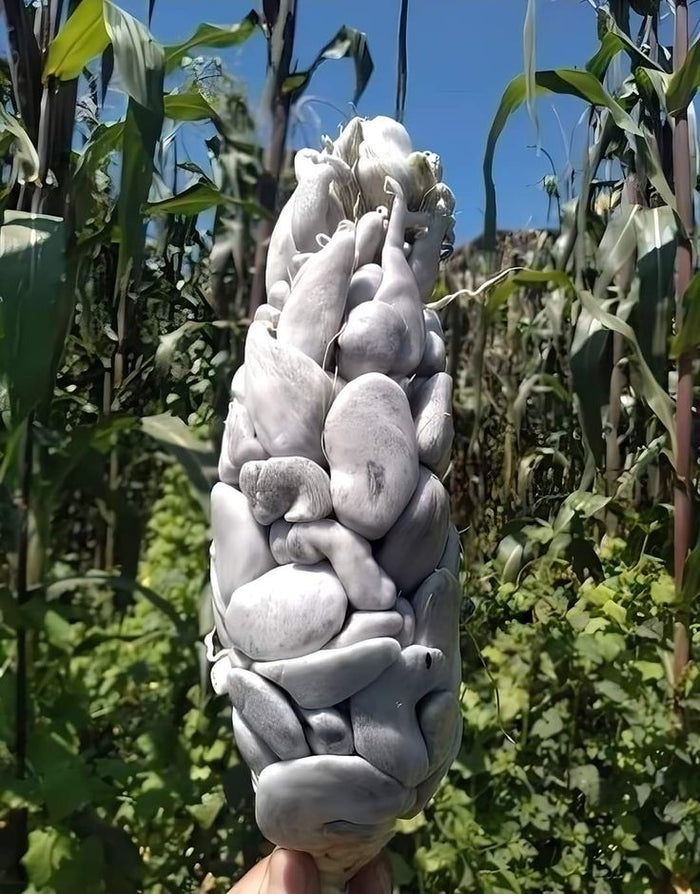
- Mexico. One of the most mycophilic countries in the world, with hundreds of documented edible species and a living wisdom: huitlacoche (the "Mexican caviar"), the rainy-season mushrooms, the corn mushroom, the boletes and chanterelles of the pine forests. We tell it in depth in Mexico: Fungi Kingdom.
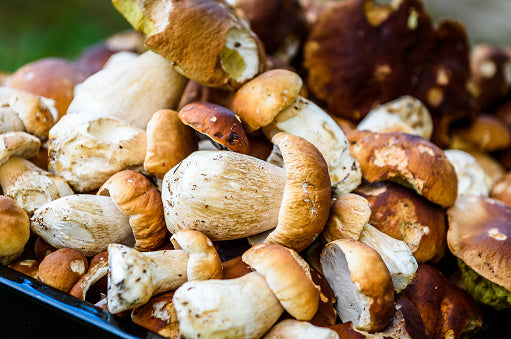
- Europe. Italy and France revere the porcini (boletus) and the truffle; chanterelles and morels are seasonal treasures. In Eastern Europe, Russia and Siberia, gathering mushrooms is almost a national sport: families harvest and eat kilos every year.
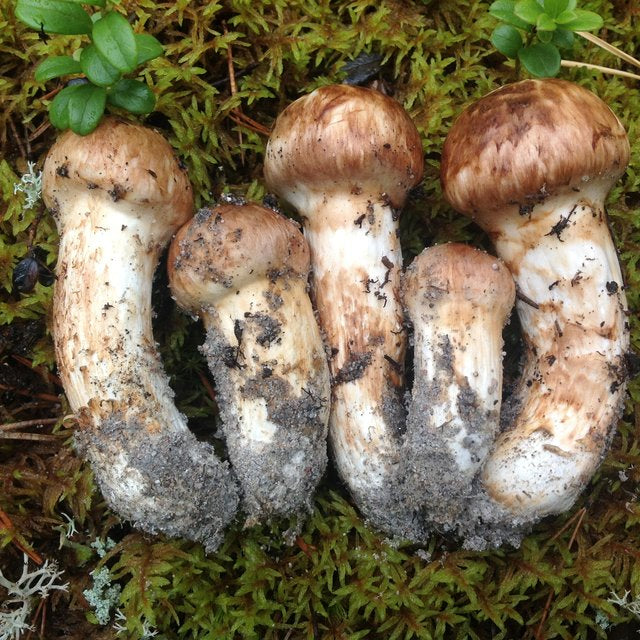
- East Asia. China and Japan have cultivated shiitake for millennia; the matsutake is so prized it is given as a jewel; enoki, maitake, shimeji and wood ear are everyday. The Chinese province of Yunnan concentrates an enormous share of the world diversity of edible wild mushrooms.
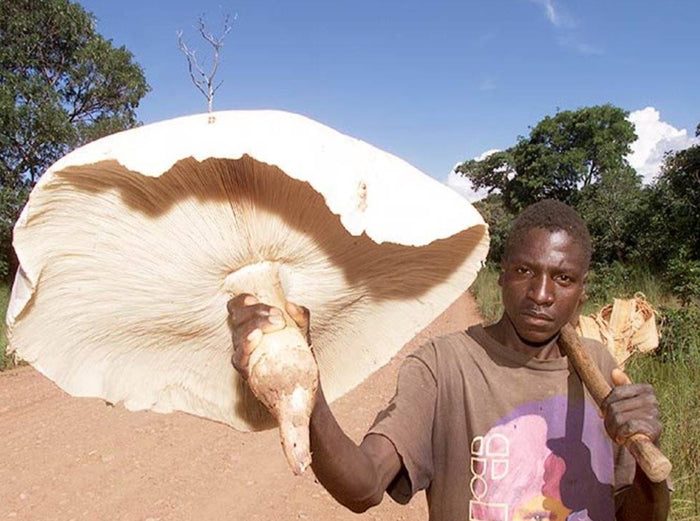
- Sub-Saharan Africa. Termite-mound mushrooms (Termitomyces) are so nutritious and tasty that many communities consider them a full substitute for meat and fish, confirmed by their nutritional analyses.
- North America. Although traditionally more mycophobic, it is now rediscovering chanterelles, morels, and the cultivation of the button and oyster mushroom.
Source of this tour: the FAO global overview of wild edible mushrooms (Boa, E.).
Blue Zones: eating mushrooms and living longer
The so-called Blue Zones are the regions of the planet with the greatest concentration of centenarians, identified by researcher Dan Buettner. In Okinawa, Japan —one of the most famous—, shiitake is part of the daily diet of those who live longest, alongside sweet potato, soy, turmeric and seaweed. The mushroom is not the only secret, but it is always on the table of longevity.

And science is beginning to give shape to that intuition. According to PubMed:
- The ergothioneine in mushrooms has been proposed as a possible "longevity vitamin" for its antioxidant and anti-inflammatory role, and mushrooms are its main dietary source (Beelman et al., 2020, J Nutr Sci; DOI).
- In older adults, eating mushrooms more than twice a week was associated with a lower likelihood of mild cognitive impairment (Feng et al., 2019, J Alzheimers Dis; DOI).
- A recent systematic review found suggestive associations between mushroom consumption and better cardiometabolic markers, plus a possible link to lower all-cause mortality — though it warns, honestly, that the evidence is still limited (Hong et al., 2024, Nutr Res Pract; DOI).
None of these lines say "the mushroom cures". They say something more interesting and more honest: that including mushrooms in the diet, for life, is associated with living better. Exactly what the Blue Zones have shown for generations with the fork.
Fungal library: for those who want to go deeper
Three references we recommend from the heart
Dr. Amaranta Ramírez Terrazo and Laura Linares — Diccionario gastronómico de hongos mexicanos (Elefanta Editorial). A biologist and doctor of science from UNAM, Dr. Amaranta has devoted her life to the relationship between cultures and mushrooms. This book is a tribute to the fungal culture of the Indigenous peoples of Mexico, at the crossroads of mycology, ethnomycology, lexicography and art. Essential to understand why ours is the mycophilic territory par excellence.
Christopher Hobbs — Medicinal Mushrooms (and its essential 2021 edition, awarded by the American Botanical Council). Hobbs, a fourth-generation mycologist and herbalist, is one of the greats at systematizing knowledge about mushrooms: tradition, science and culture in one place.
Robert Rogers — The Fungal Pharmacy (North Atlantic Books, 2011). More than 300 profiles of mushrooms and lichens, with highly detailed tables of active compounds and uses. A reference gem for those who want to go all the way.
You can find titles like these in our Fungal Books collection. Reading, too, is a way to become a mycophile.
Living recipe books of the Indigenous peoples
The best way to lose your fear of the mushroom is to cook it as it has been done for generations. These recipe books were born from the communities themselves and are freely available on the web:
- Recetario Tradicional de Hongos Silvestres (Red Temática del Patrimonio Biocultural, 2017) — recipes dictated by the communities of Nanacamilpa and San Isidro Buensuceso (Tlaxcala), El Tejocotal and El Cerezo (Hidalgo) and Jicolapa (Puebla). Broths, manitas in green sauce and more, told by those who cook them.
- To keep exploring: Recetario de Hongos. Tianguis y Mercados del Estado de Hidalgo (Universidad Autónoma del Estado de Hidalgo) and the Guía ilustrada de los hongos comestibles de la comunidad p'urhépecha de Tingambato, Michoacán — two more windows into the living mycological knowledge of Mexico.
The easiest thing in the world: start with a recipe
Knowing why it is worth eating mushrooms is the first step. The second is to lose your fear in the kitchen, and for that there is no better teacher than example. Our recipe books exist for a reason; the great chefs of Mexico integrate them into their menus for a reason. If they could turn a mushroom into a memorable dish, you can do it too at home.

Imitate your heroes: discover how the chefs cook with Simbiosis, and then dive into our Recipe Book, where each dish tells you exactly which mushroom you need and how to prepare it. Not sure where to start? Explore the recipe book by category.
The mushroom you are missing, we get it for you

Every recipe is born from an ingredient, and that ingredient you have at Simbiosis. Powders, gourmet mushrooms, bulk for everyday cooking: whatever the dish calls for, we get it so you only have to worry about enjoying it. Becoming a fungivore starts with a first bite.
Gourmet mushrooms to cookPowders and capsulesThis information is educational and nutritional in nature and does not replace the advice of a health professional. Simbiosis products contribute to conscious eating and to supporting general well-being; they are not intended to diagnose, treat, cure or prevent any disease.
To keep exploring
- Mushrooms and Medicine — from penicillin to today's beta-glucans
- Biocomponents — the active chemistry behind nutrition
- Species — the mushrooms of Simbiosis, one by one
- Fermentation — another delicious way to eat mushrooms
- Mexico: Fungi Kingdom — the mycophilic country par excellence
- Recipe Book and Simbiosis Chefs — put all of this on your plate
References. According to PubMed: Beelman et al. (2020), J Nutr Sci 9:e52, ergothioneine as a possible "longevity vitamin" (DOI 10.1017/jns.2020.44); Feng et al. (2019), J Alzheimers Dis 68:197-203, mushroom consumption and mild cognitive impairment (DOI 10.3233/JAD-180959); Hong et al. (2024), Nutr Res Pract 18:165-179, systematic review of mushrooms and cardiometabolic health (DOI 10.4162/nrp.2024.18.2.165). Protein and amino acid profile: review on fungal protein, 19-37% of dry weight with a complete essential amino acid profile (PMC10563202). Global consumption atlas: Boa, E., Food and Agriculture Organization of the United Nations (FAO), global overview of wild edible mushrooms (FAO). Blue Zones: Buettner, D., bluezones.com. Recommended reading: Ramírez Terrazo, A. and Linares, L., Diccionario gastronómico de hongos mexicanos (Elefanta Editorial); Christopher Hobbs, Medicinal Mushrooms (and The Essential Guide, Storey, 2021); Robert Rogers, The Fungal Pharmacy (North Atlantic Books, 2011). Indigenous recipe books: Recetario Tradicional de Hongos Silvestres, Red Temática del Patrimonio Biocultural (2017), PDF. Nutritional values are approximate per 100 g and vary by species, maturity and preparation.